invoo: From Idea to Multi-Platform Product
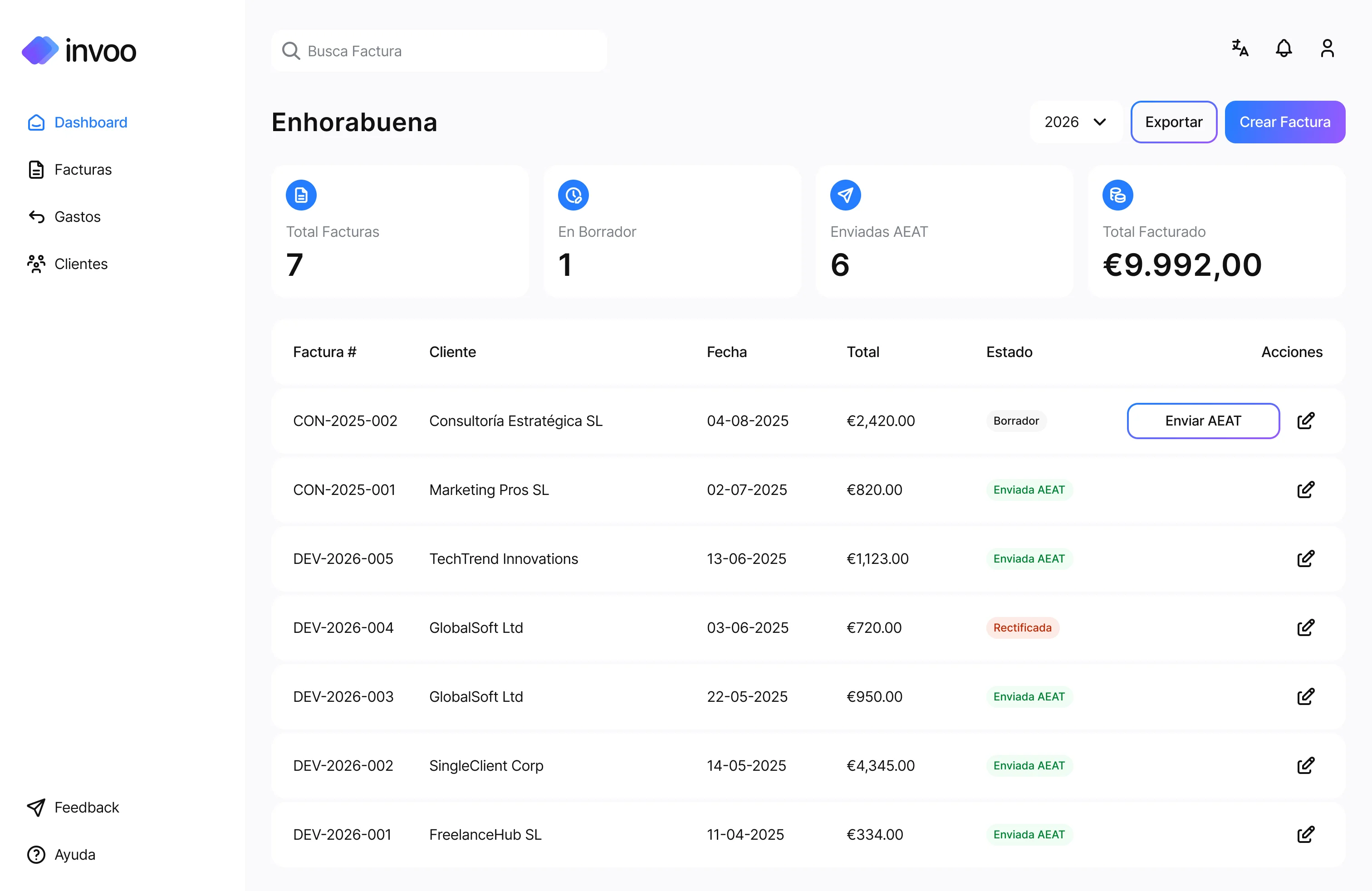
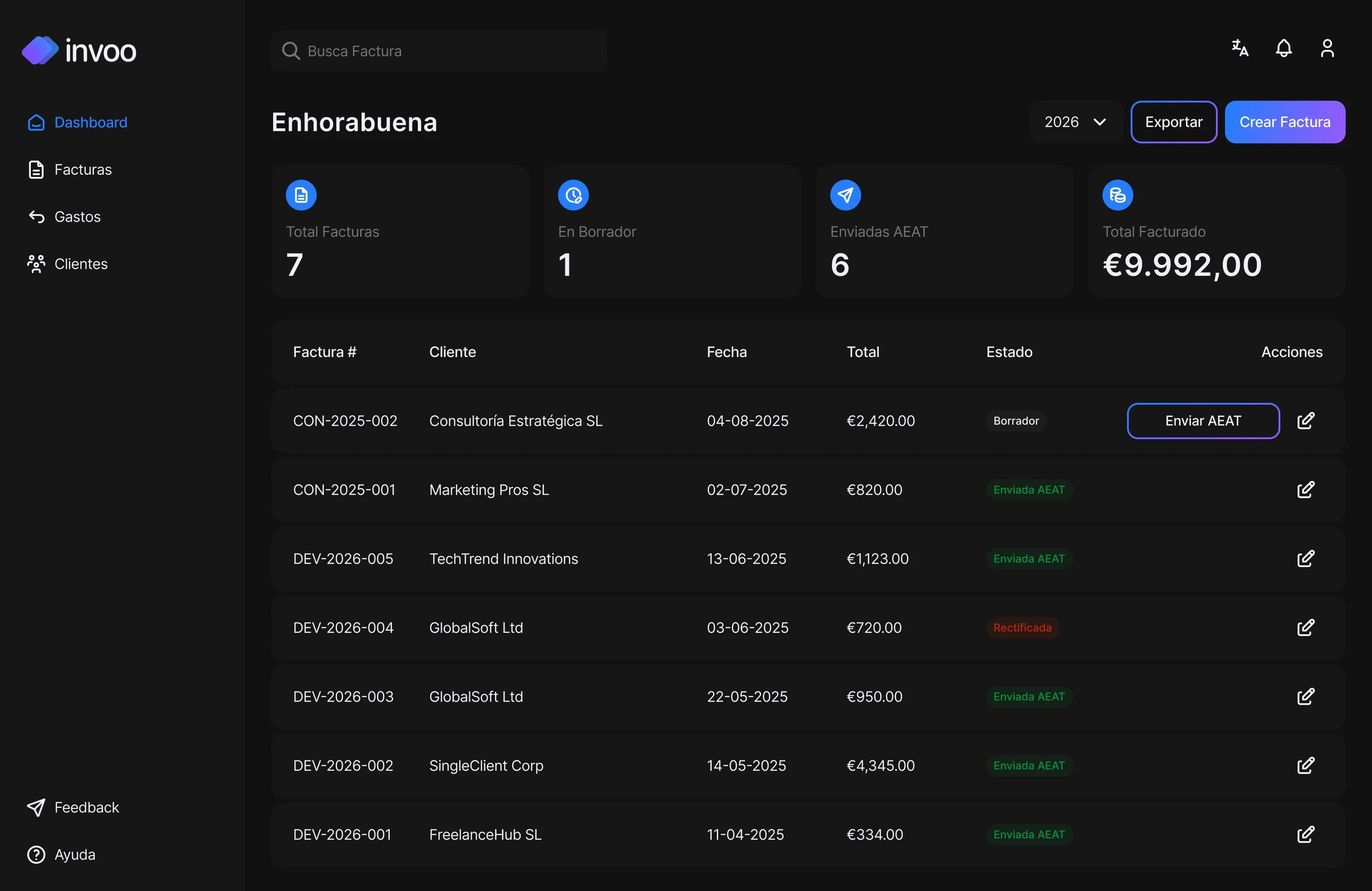
Co-founded an invoicing tool for Spanish freelancers. Built web and mobile from scratch in 2 months. 150+ waitlist signups, zero ad spend. Launched May 2026, live with the first cohort.
Why This
Spanish freelancers waste 15+ hours a year on invoice admin that should take minutes.
I co-founded a tool that cuts invoice creation to 15 seconds. Then I built a native mobile app in 8 days to put it in their pocket.
150+ people signed up before the product launched. Zero ad spend. Web, mobile, and a shared backend, shipped publicly on May 5, 2026.
Root Cause
AEAT announced mandatory digital invoicing. I saw an opportunity.
Spanish freelancers and small businesses already hate compliance. Now they would be forced to use invoicing software. The existing options were painful.
I spent weeks reading X posts and Reddit threads. The pattern was clear: tools complied with regulations, but they tried to do everything and did nothing well. Cluttered interfaces. Confusing workflows. Features nobody asked for.
Worse, competitors charge users to connect with accountants. Freelancers feel this pain most, but small businesses have the same problem: create an invoice fast, know the tax is correct, and connect with your accountant without paying extra.
Nobody was focused on that.
And none of the competitors offered a real mobile experience. Freelancers invoice from job sites, cafes, and client meetings. They need native speed, not a responsive web page.
Key Bet
We made three bets across the life of this project.
First, speed over perfection. I owned everything user-facing while my co-founder handled backend. No handoffs, no waiting. When I spotted a gap, I fixed it that afternoon.
Second, we pivoted our tech stack mid-build. We started with React and Next.js, but discovered security gaps and realized that switching to Angular and Java would let us apply as an official AEAT API provider. That pivot cost us a month.
Third, the mobile gap I spotted during research was too big to ignore. None of the competitors had a real native app. Freelancers invoice from job sites, cafes, and client meetings. A responsive site would never match the speed of native haptics, context menus, and offline-ready architecture.
I chose React Native with Expo to share the existing Spring Boot backend while delivering a truly native feel.
“Sometimes slowing down is the faster path.”
How I Built
The go-to-market was simple: listen, help, convert.
I spent the first weeks in freelancer communities on social media, tracking the tax questions that kept appearing. Then I wrote guides that solved those exact problems and posted them back to the communities where I found them.
No pitch. Just value.
That content drove traffic to the blog. Visitors found more helpful articles and a waitlist signup. By the time we announced the product, we had already helped hundreds of freelancers.
While the blog built the audience, we built the web experience. Once the platform was nearly complete — database, endpoints, core flows all in place — I turned to mobile.
The market gap was clear from day one — no competitor had a native experience — so I went all in. 8 days. 40+ commits from initial scaffold to feature-complete. Five core tabs: Dashboard, Clients, Catalogue, Expenses, and Settings.
The app shares the same Spring Boot backend and authentication with the web version.
“No pitch, just value.”
What Shipped
150+ waitlist signups before launch. Zero ad spend.
The mobile app shipped feature-complete in 8 days, proving the shared backend architecture was the right call.
Launched publicly on May 5, 2026. Real freelancers are creating real invoices and getting paid through the product. The early cohort is the next product input — what they hit, what they ask for, what they keep coming back to is what shapes v2.
What I'd Do Differently
Two pivots. Both right. Both avoidable.
We started with React and Next.js, then realized we needed Angular and Java to qualify as an official AEAT API provider. That cost us a month. If I had mapped the regulatory requirements before choosing a stack, we would have started there.
Same story on mobile. I built the first version with Ionic, but the transitions and gestures felt off. I switched to React Native and the difference was immediate. I should have trusted my gut earlier — if native feel matters, go native from the start.
More Case Studies
Explore other projects I've worked on
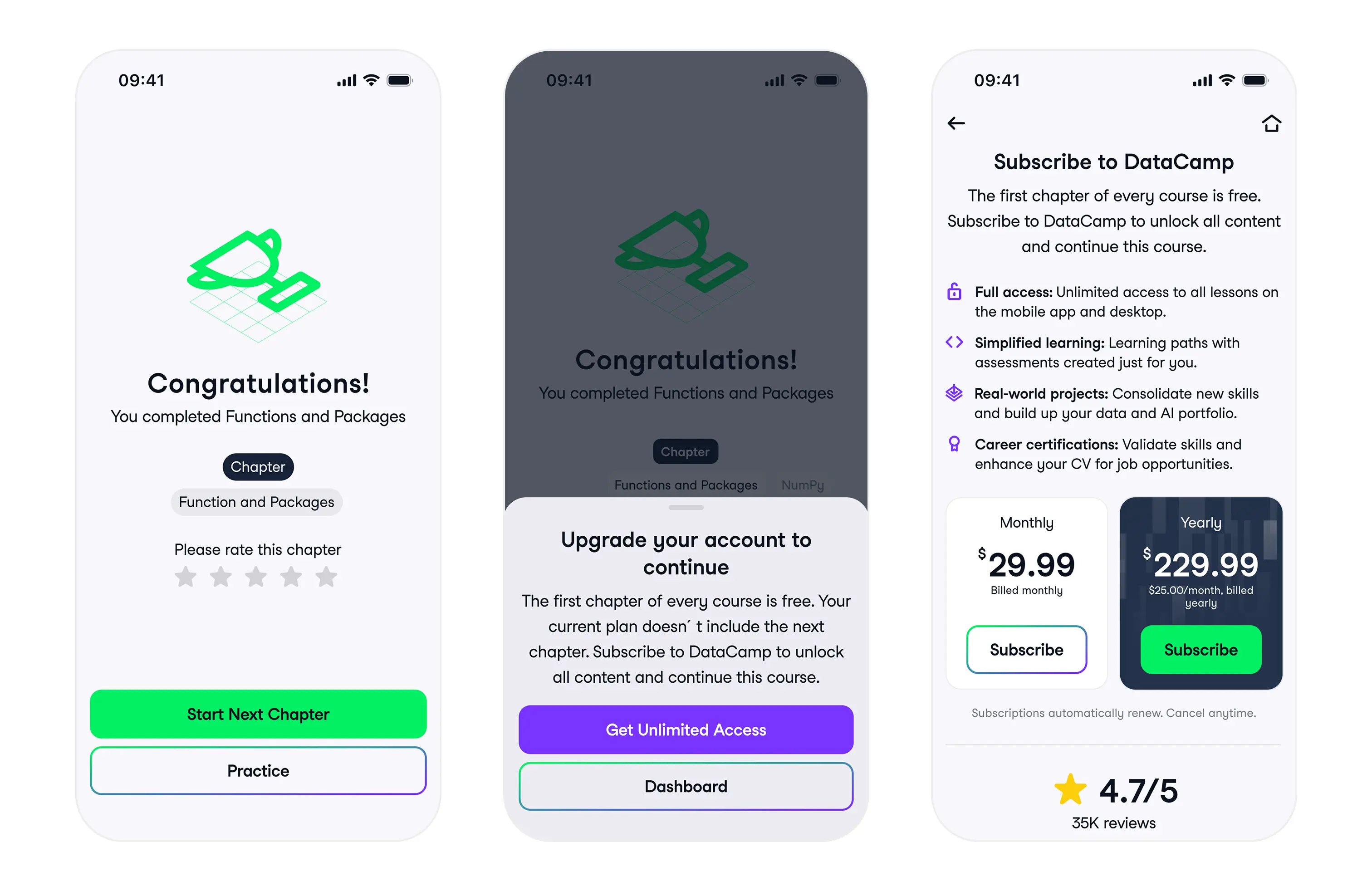
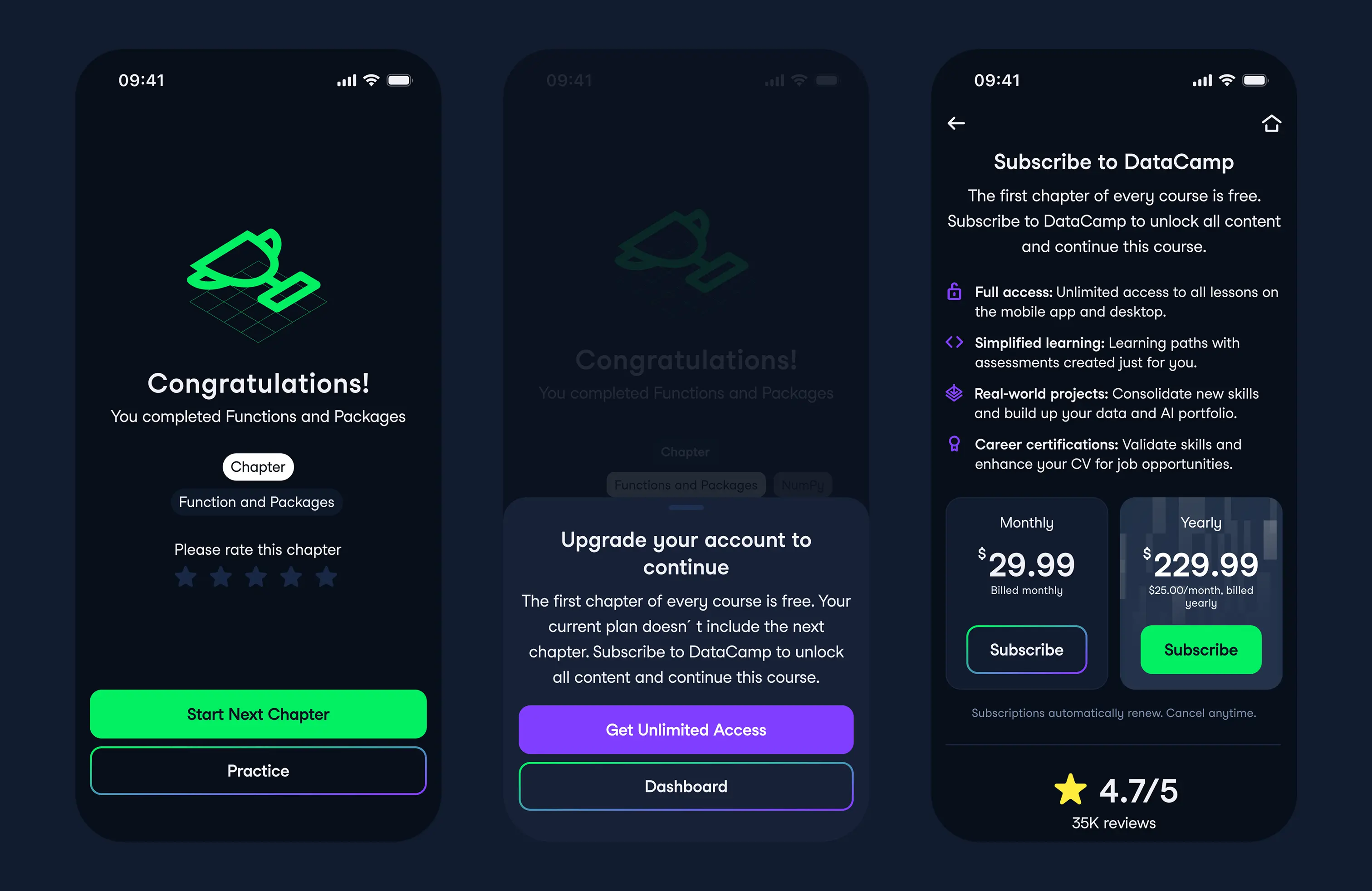
DataCamp Paywall: 50% Conversion Lift From Deleting a Feature
65% of users bounced on a screen before ever seeing the paywall. I deleted it entirely and lifted conversions by 50%.
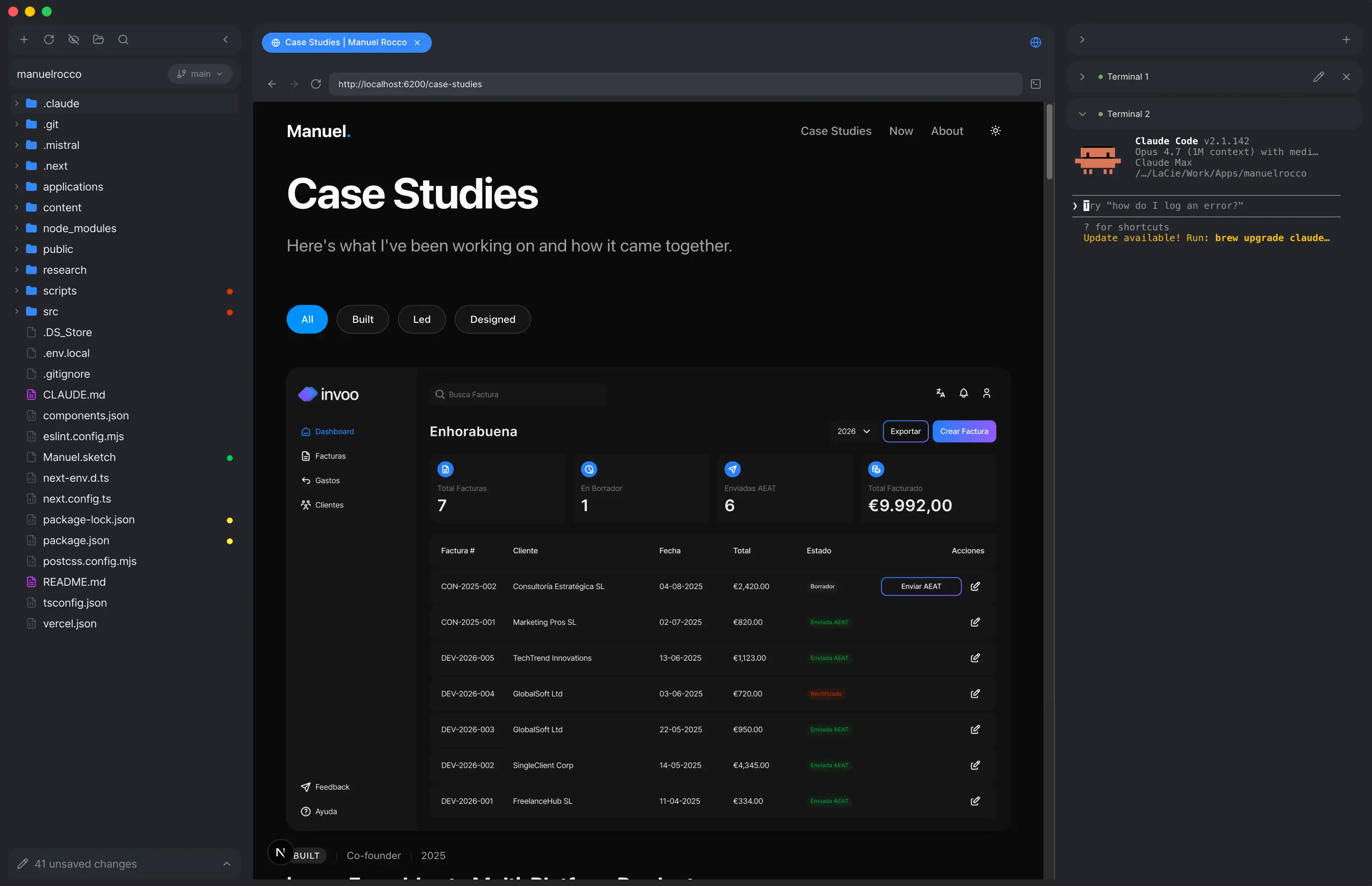
Deck: The IDE I built because nothing on the market fit
Existing IDEs are either cluttered with dev features I don't use or too heavy on agentic workflow. I wanted something simple: read code files, render Markdown nicely, and run Claude Code in multiple terminals side by side. So I built it. Electron, React, TypeScript, CodeMirror, xterm.js. Actively maintained.
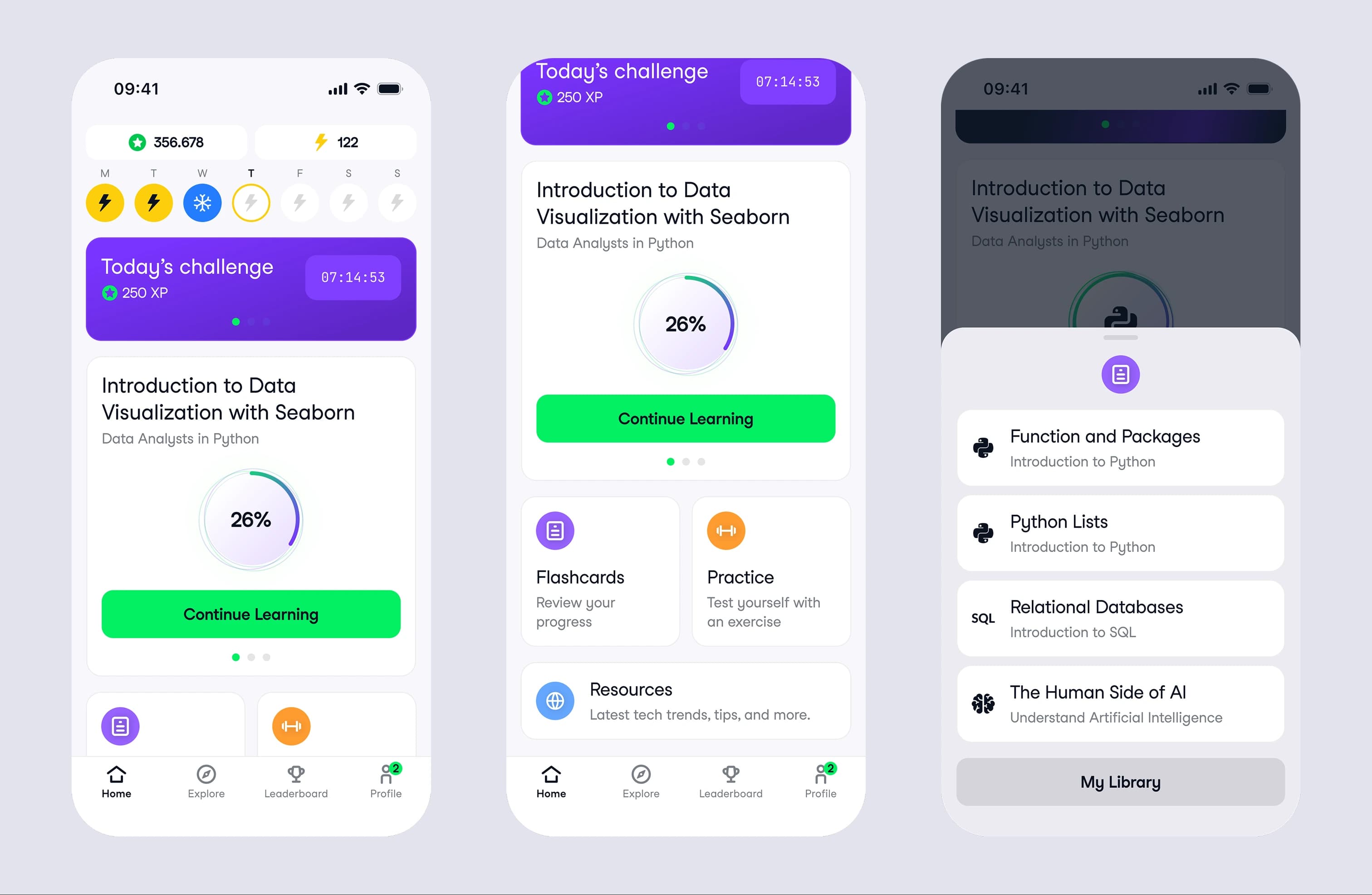
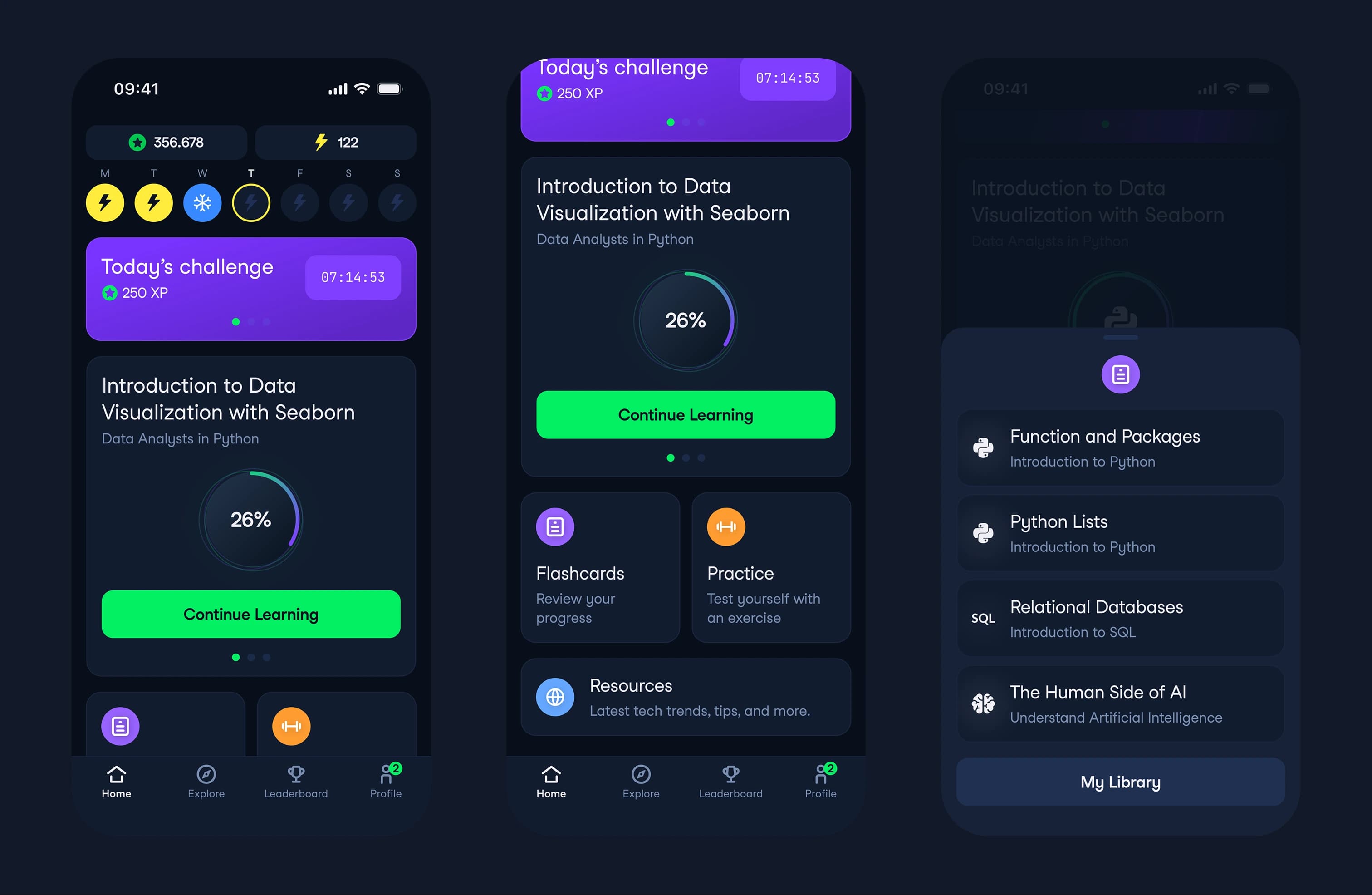
DataCamp Mobile Home: From Content Overload to 7% Course Lift
I bet that users think in actions, not courses. Restructured the entire home screen around learn/practice/review instead of course types. Bounce rate dropped 10%, course engagement rose 7%.
ai-org: scaffolding I clone into every new project
A reusable Claude Code plugin that ships four portable layers into any repo: agents with a point of view, skills with explicit rules, commands that trigger workflows, and product knowledge the AI can actually read. Running in four of my active projects, plus designers at DataCamp using it to ship code they wouldn't have attempted alone.